
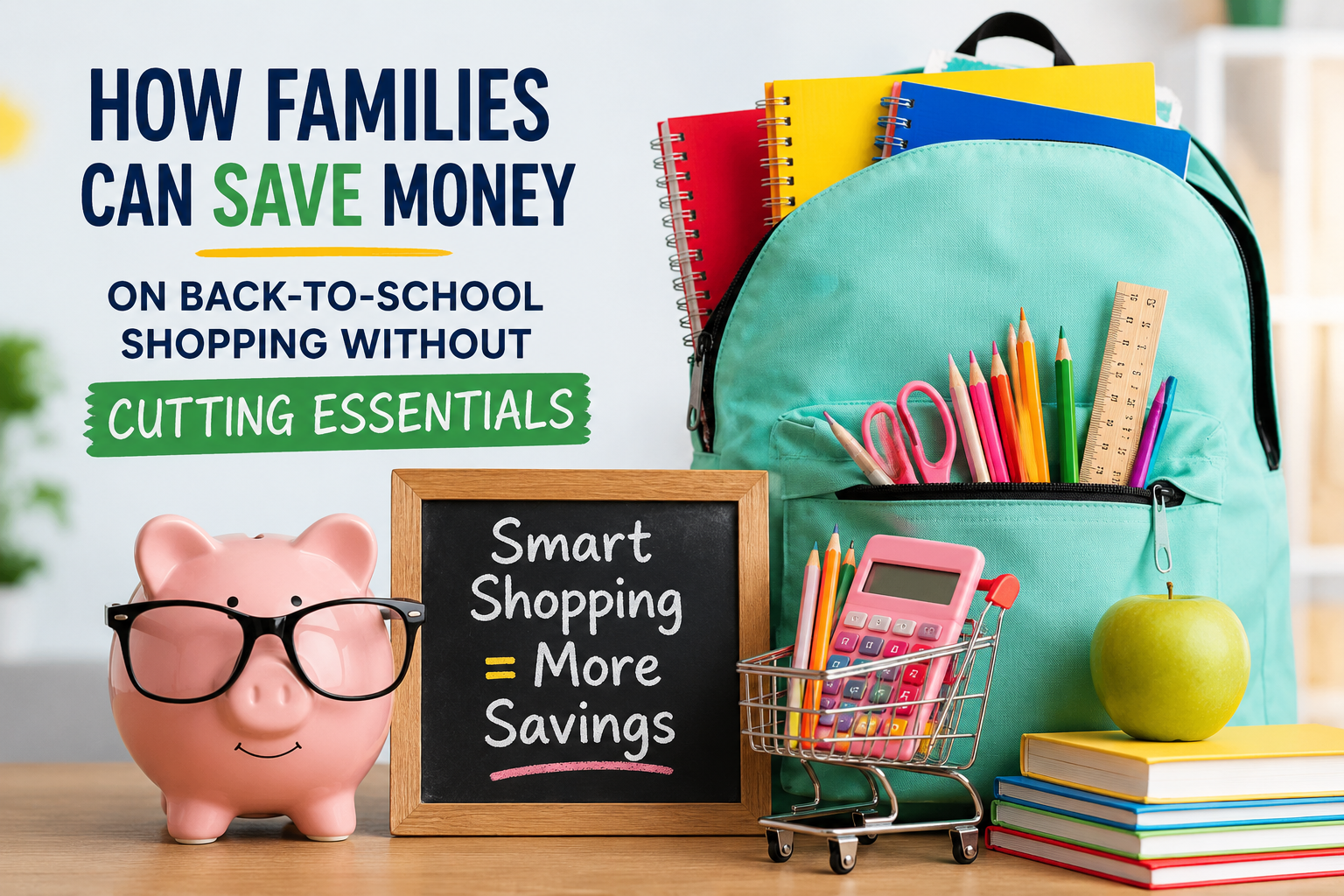
How Families Can Save Money on Back-to-School Shopping Without Cutting Essentials
Back-to-school shopping can put a serious strain on a household budget. New clothes, shoes, school supplies, backpacks, lunch containers, electronics and other necessities can quickly add up, particularly for families with several children.
The good news is that saving money does not have to mean sending children to school without what they genuinely need. The biggest savings often come from planning purchases carefully, distinguishing essentials from extras and avoiding the pressure to buy everything at once.
Here are practical ways families can reduce back-to-school expenses while still covering the essentials.
Start With What You Already Have
Before opening a shopping list or visiting a store, take inventory of what is already in the house.
Children may still have usable notebooks, folders, pens, pencils, calculators, lunch containers, backpacks or clothing from the previous school year. Some supplies may only need a little organizing or cleaning rather than replacing.
Go through drawers, closets, storage areas and school bags before buying anything new. Creating a simple inventory can prevent families from paying for items they already own.
This is especially useful for supplies that tend to accumulate over time. A household may have several packs of pencils or notebooks without realizing it.
Separate Essentials From Nice-to-Have Items
School shopping lists can become expensive when every item is treated as equally urgent.
Divide the list into three categories:
- Essential now: Items the child needs immediately for school.
- Needed later: Items that will eventually be required but can wait.
- Optional: Items that may be convenient, attractive or desirable but are not necessary.
For example, a child may genuinely need school shoes before the first day but may not need several new outfits immediately.
This approach allows families to concentrate their money on necessities instead of exhausting the budget before the school year even begins.
Set a Spending Limit Before Shopping
A budget is much easier to follow when it is established before purchases begin.
Families can create a total back-to-school spending limit and divide it into categories such as:
| Category | Budget |
|---|---|
| School supplies | $___ |
| Clothing | $___ |
| Shoes | $___ |
| Backpack | $___ |
| Technology | $___ |
| Lunch and personal items | $___ |
| Other required expenses | $___ |
The exact amounts will vary from family to family. The important part is giving every category a limit.
If one category goes over budget, look for savings elsewhere rather than simply increasing the overall spending limit.
Prioritize Items That Will Last
The cheapest item is not always the least expensive choice in the long run.
A backpack that costs slightly more but lasts several school years may provide better value than repeatedly replacing a cheaper bag. The same principle can apply to shoes, lunch containers, calculators and other frequently used products.
That does not mean families should automatically choose the most expensive option. Instead, compare durability, quality, warranties and expected use alongside the price.
A useful question is:
How much will this item cost per year of use?
An item that lasts three years may be a better purchase than one that needs to be replaced every year, even if its initial price is higher.
Compare Prices Before Buying
Prices can vary significantly between retailers, especially for electronics, clothing and larger school supplies.
Before purchasing an expensive item, compare prices from several stores and online retailers. Check the total cost, including delivery charges or other fees, rather than comparing the advertised price alone.
Families should also avoid assuming that a familiar retailer always has the best deal. A quick comparison can reveal a lower price elsewhere.
For everyday supplies, however, the time spent searching for tiny price differences may not be worthwhile. Focus comparison-shopping efforts on purchases where the potential savings are meaningful.
Buy School Supplies in Stages
There is no rule that says every school-related purchase must happen in one shopping trip.
If the school does not require an item immediately, families can spread purchases over several weeks or months. This can make the expense easier to manage and reduce the temptation to make rushed purchases.
For example, a family might purchase essential supplies first, then buy additional items after receiving more specific instructions from teachers.
This strategy can also prevent parents from purchasing supplies that ultimately turn out to be unnecessary.
Be Careful With Technology Purchases
Technology can be one of the largest expenses on a back-to-school shopping list.
Before buying a new laptop, tablet or other device, determine exactly what the student needs. A child may not require the newest model if an existing device still meets the school’s requirements.
Check:
- Required operating system
- Minimum memory
- Storage requirements
- Required software
- Battery expectations
- Compatibility with school platforms
- Whether accessories are actually necessary
Families should also check whether the school provides access to devices or software before purchasing their own.
Buying technology based on specifications rather than marketing can help prevent unnecessary spending.
Consider Secondhand Items
Secondhand shopping can significantly reduce the cost of certain back-to-school purchases.
Depending on the item and school requirements, families may be able to find gently used:
- Clothing
- Uniforms
- Books
- Backpacks
- Sports equipment
- Calculators
- Furniture
- Musical instruments
Some items are particularly well suited to secondhand purchasing because children may outgrow them quickly.
Parents should still check condition and safety before purchasing used products, particularly when buying equipment that could pose a safety risk if damaged.
Buy Clothing Strategically
Children do not necessarily need a completely new wardrobe at the beginning of every school year.
Start by identifying what still fits and what remains in good condition. Then replace the most important gaps.
Families can also build a practical school wardrobe around versatile pieces that work with multiple outfits. This reduces the number of individual items required.
When children need new clothing, consider durability as well as appearance. A slightly more expensive item that survives frequent washing and regular school use may provide better value.
It can also be helpful to involve older children in the process by setting a clothing budget and allowing them to decide how to allocate it. This can turn shopping into an opportunity to teach budgeting and trade-offs.
Avoid Buying Too Much Too Early
One of the easiest ways to overspend is purchasing large quantities before knowing whether they will actually be used.
School requirements can vary by teacher, grade and classroom. A generic supply list may not tell the whole story.
Buy what is clearly required first. Wait on uncertain items until the school or teacher confirms that they are necessary.
This approach is particularly useful for specialized supplies and technology.
Look for Reusable Alternatives
Some purchases can be reduced by choosing reusable products.
Reusable lunch containers, water bottles and other durable items can eliminate the need to repeatedly purchase disposable alternatives.
The key is to consider whether the reusable product will actually be used consistently. A reusable item that sits unused in a cupboard does not provide meaningful savings.
The best choices are products that fit naturally into the family’s existing routines.
Watch for Marketing Pressure
Back-to-school advertising is designed to create urgency.
Bright displays, limited-time promotions, character-themed products and social-media trends can make children feel that they need particular brands or styles to start the school year.
Parents can help separate what a child needs from what advertising suggests they need.
This does not mean children should never choose products they like. A reasonable approach is to establish the essentials first and then allow room in the budget for a few personal choices.
That gives children some independence without allowing optional purchases to consume the entire budget.
Teach Children About the Budget
Back-to-school shopping can become a useful financial lesson.
Older children can participate in comparing prices, creating shopping lists and deciding which optional purchases are worth the money.
For example, give a child a fixed amount for certain supplies and let them make choices within that limit.
They learn that money is finite, that purchases involve trade-offs and that choosing one expensive item may mean giving up another.
These lessons can be more valuable than simply finding the absolute lowest price.
Don’t Confuse Discounts With Savings
A discount only saves money if the item was needed in the first place.
Buying a $40 item for $25 is not necessarily a $15 saving if the family would never have purchased the item without the promotion.
Before responding to a sale, ask:
- Was this already on the shopping list?
- Is it genuinely needed?
- Would we buy it at the regular price?
- Do we have room for it in the budget?
- Is there a cheaper alternative that meets the same need?
This simple test can prevent “bargain” purchases from becoming budget problems.
Keep Receipts and Track Spending
Back-to-school expenses can become difficult to track when purchases are made across multiple stores and online platforms.
Keep receipts and maintain a running total. A simple spreadsheet, notes app or budgeting application can be enough.
Tracking spending makes it easier to see when a category is approaching its limit.
It also helps families understand their actual back-to-school spending from year to year, making future budgeting easier.
Make the Budget Work Around Priorities
The goal of back-to-school budgeting isn’t to spend as little as possible.
It is to make sure limited money goes toward the things that matter most.
A family may reasonably decide to spend more on durable shoes while spending less on decorative supplies. Another household might prioritize a reliable computer because a student depends heavily on it for schoolwork.
There is no universal shopping budget that works for every family. The strongest approach is to identify the student’s genuine needs, establish financial limits and allocate money accordingly.
Smart Shopping Can Protect the Family Budget
Back-to-school shopping does not have to become a financial setback.
The most effective savings usually come from a combination of small decisions: checking what is already available, prioritizing essentials, comparing meaningful purchases, buying durable products, delaying unnecessary purchases and keeping track of spending.
Families can also use the process to teach children practical money skills. Learning to distinguish between needs and wants, compare prices and make choices within a budget are lessons that extend well beyond the school year.
The objective is simple: make sure children have what they need without turning a new school year into unnecessary financial pressure.





2 Comments
Micle harison
June 7, 2019Lorem ipsum dolor sit amet, usu ut perfecto postulant deterruisset, libris causae volutpat at est, ius id modus laoreet urbanitas. Mel ei delenit dolores.
John Doe
June 7, 2019Some consultants are employed indirectly by the client via a consultancy staffing company.