
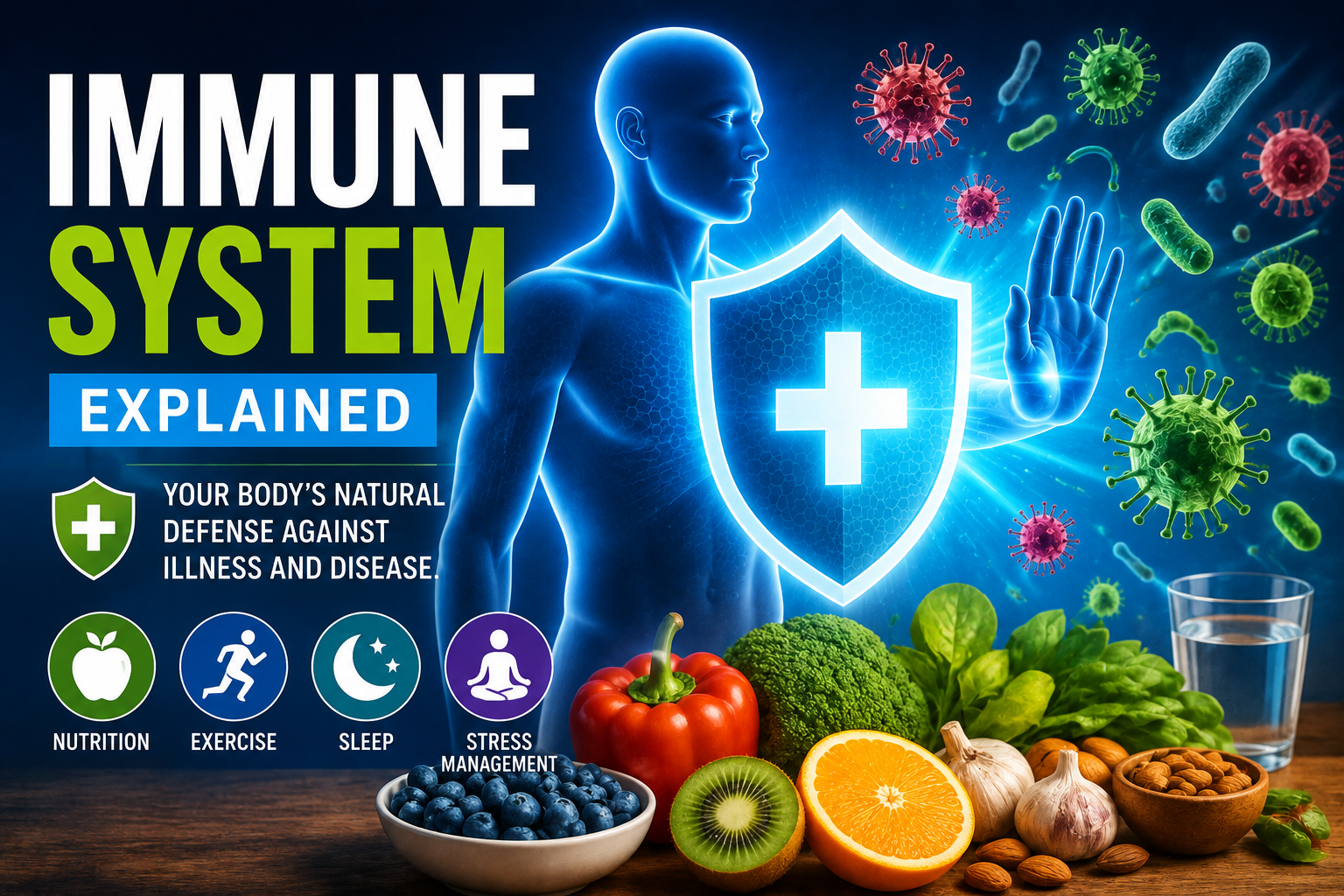
Immune System Explained
The immune system is the body’s natural defense network, working around the clock to protect against harmful bacteria, viruses, fungi, parasites, and other potentially dangerous substances. Every day, it identifies and responds to countless threats, helping keep people healthy while repairing damaged tissues and supporting recovery from illness.
Advances in medical research have greatly improved our understanding of how the immune system functions. While vaccinations, healthy nutrition, regular exercise, and quality sleep all contribute to a well-functioning immune system, maintaining long-term immune health depends on a combination of healthy lifestyle habits rather than any single product or supplement.
c
What Is the Immune System?
The immune system is a complex network of organs, tissues, cells, and proteins that work together to defend the body against infections and disease.
Its primary functions include:
- Detecting harmful pathogens
- Destroying invading microorganisms
- Removing damaged cells
- Supporting tissue repair
- Remembering previous infections
- Preventing future illness
A healthy immune system constantly monitors the body while distinguishing between harmful invaders and the body’s own healthy cells.
Why the Immune System Matters
Without a functioning immune system, even minor infections could become life-threatening.
A healthy immune system helps:
- Fight infections
- Reduce illness severity
- Speed recovery
- Protect against recurring diseases
- Support wound healing
- Remove damaged cells
- Maintain overall health
Its ability to adapt and respond makes it one of the body’s most important protective systems.
The Two Main Types of Immunity
The immune system relies on two closely connected defense mechanisms.
Innate Immunity
Innate immunity is the body’s first line of defense and responds quickly to invading pathogens.
It includes:
- Skin
- Mucous membranes
- Stomach acid
- White blood cells
- Inflammatory responses
- Fever
This response acts rapidly but does not specifically recognize individual pathogens.
Adaptive Immunity
Adaptive immunity develops after exposure to a specific pathogen or through vaccination.
It involves:
- B cells
- T cells
- Antibodies
- Immune memory
This system learns to recognize previous infections, allowing faster and more effective responses in the future.
Key Parts of the Immune System
Several organs and tissues play essential roles in immune function.
Bone Marrow
Bone marrow produces many of the blood cells involved in immune defense, including white blood cells.
Thymus
The thymus helps develop T cells, which play a central role in adaptive immunity.
Lymph Nodes
Lymph nodes filter harmful substances and provide locations where immune cells communicate and respond to infections.
Spleen
The spleen filters blood, removes old blood cells, and helps fight infections.
White Blood Cells
White blood cells are the primary immune cells responsible for identifying and eliminating harmful microorganisms.
Major types include:
- Neutrophils
- Lymphocytes
- Monocytes
- Eosinophils
- Basophils
Each performs specialized immune functions.
How the Immune System Responds to Infection
When harmful microorganisms enter the body, the immune response generally follows several steps.
- Detection of the invading pathogen.
- Activation of immune cells.
- Production of antibodies or direct destruction of infected cells.
- Removal of damaged tissue.
- Development of immune memory for future protection.
This coordinated response helps minimize illness while preparing the body for future encounters with the same pathogen.
Antibodies Explained
Antibodies are specialized proteins produced by B cells.
They help:
- Identify pathogens
- Neutralize viruses
- Mark bacteria for destruction
- Prevent reinfection
After many infections or vaccinations, antibodies remain in the body, contributing to long-term immunity.
Inflammation: A Natural Defense
Inflammation is a normal immune response that helps the body fight infections and repair damaged tissues.
Common signs include:
- Redness
- Swelling
- Warmth
- Pain
- Temporary loss of function
While short-term inflammation is beneficial, chronic inflammation may contribute to certain long-term health conditions.
Vaccination and Immunity
Vaccines help train the immune system without causing the disease itself.
Vaccination supports immunity by:
- Stimulating antibody production
- Building immune memory
- Reducing the risk of severe illness
- Helping limit the spread of infectious diseases
Vaccination remains one of the most effective public health tools for preventing many infectious diseases.
Factors That Support Immune Health
Several healthy lifestyle habits help the immune system function effectively.
Eat a Balanced Diet
A nutrient-rich diet provides vitamins, minerals, protein, and healthy fats needed for normal immune function.
Foods commonly associated with immune support include:
- Fruits
- Vegetables
- Whole grains
- Lean proteins
- Nuts
- Seeds
- Legumes
- Yogurt
Stay Physically Active
Regular physical activity supports circulation and contributes to overall health, which benefits immune function.
Get Enough Sleep
Quality sleep allows the body to recover and supports normal immune responses.
Manage Stress
Long-term stress may affect immune function, making stress management an important part of overall wellness.
Stay Hydrated
Adequate hydration supports circulation, nutrient transport, and many normal body processes.
Avoid Smoking
Smoking damages many protective mechanisms throughout the body and can reduce immune efficiency.
Limit Excessive Alcohol
Heavy alcohol consumption may impair immune responses and increase susceptibility to infections.
Common Immune System Disorders
Sometimes the immune system does not function as intended.
Examples include:
Allergies
The immune system overreacts to normally harmless substances such as pollen or certain foods.
Autoimmune Diseases
The immune system mistakenly attacks healthy body tissues.
Examples include:
- Rheumatoid arthritis
- Lupus
- Type 1 diabetes
- Multiple sclerosis
Immunodeficiency Disorders
These conditions reduce the body’s ability to fight infections effectively.
They may be inherited or acquired later in life.
Common Myths About Immunity
Several misconceptions surround immune health.
Myth: One Food Can Boost Immunity Overnight
No single food dramatically strengthens the immune system. Overall dietary patterns matter far more.
Myth: More Vitamins Always Mean Better Immunity
Taking excessive amounts of vitamins does not necessarily improve immune function and may be harmful in some cases.
Myth: Cold Weather Directly Causes Colds
Cold temperatures themselves do not cause viral infections, although seasonal behaviors may increase exposure to viruses.
Myth: Supplements Can Replace Healthy Habits
Supplements may help in certain situations, but they do not replace balanced nutrition, adequate sleep, exercise, and preventive healthcare.
Future of Immune System Research
Scientists continue exploring new ways to understand and improve immune health.
Emerging areas of research include:
- Personalized immunotherapy
- Cancer immunotherapy
- Vaccine technology
- Artificial intelligence in disease detection
- Precision medicine
- Microbiome research
- Gene therapies
- Immune aging
These advances may lead to more targeted treatments and improved disease prevention in the future.
Final Thoughts
The immune system is one of the body’s most remarkable defense mechanisms, protecting against infections while supporting healing and long-term health. Its ability to recognize harmful invaders, remember past infections, and coordinate complex responses allows people to recover from illness and maintain overall well-being.
Although no single habit guarantees perfect immunity, maintaining a balanced diet, staying physically active, getting enough sleep, managing stress, practicing good hygiene, and keeping up with recommended vaccinations can all help support normal immune function. By adopting healthy lifestyle habits and understanding how the immune system works, individuals can take meaningful steps toward protecting their health throughout every stage of life.


2 Comments
Micle harison
June 7, 2019Lorem ipsum dolor sit amet, usu ut perfecto postulant deterruisset, libris causae volutpat at est, ius id modus laoreet urbanitas. Mel ei delenit dolores.
John Doe
June 7, 2019Some consultants are employed indirectly by the client via a consultancy staffing company.