
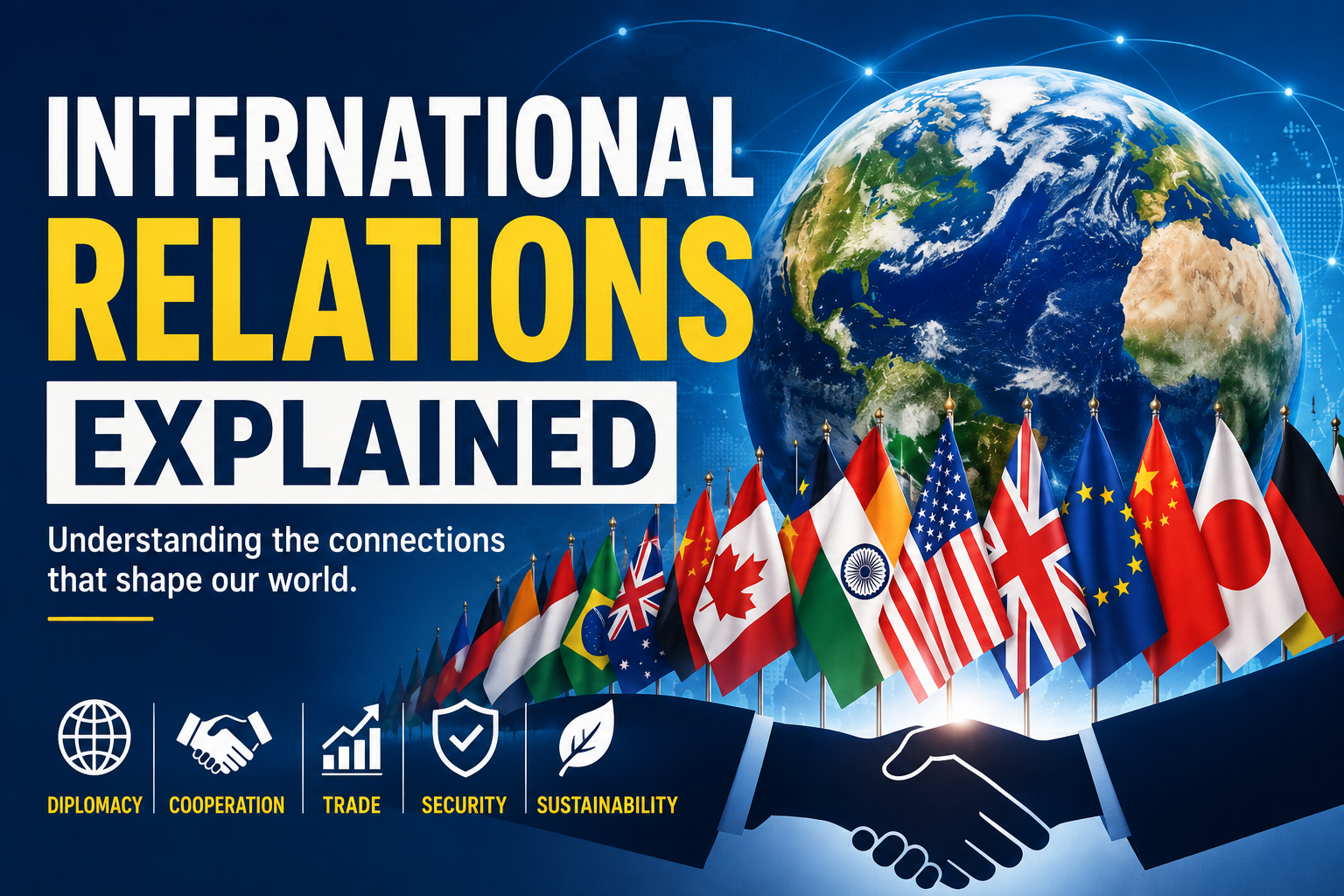
International Relations Explained
International relations shape how countries cooperate, compete, and respond to global challenges. From trade agreements and diplomatic negotiations to military alliances and climate initiatives, the relationships between nations influence economic growth, global security, technological innovation, and the daily lives of billions of people around the world.
In today’s interconnected world, events in one country can quickly affect others through financial markets, supply chains, migration, public health, and international security. As globalization continues to deepen economic and political ties, understanding international relations has become increasingly important for governments, businesses, and citizens alike.
This guide explains what international relations are, why they matter, the major actors involved, key theories, global institutions, current challenges, and the future of international cooperation.
What Are International Relations?
International relations (IR) is the study of how countries, international organizations, businesses, and other global actors interact with one another.
It includes the study of:
- Diplomacy
- Foreign policy
- International trade
- Global security
- Human rights
- International law
- Economic cooperation
- Environmental agreements
International relations seek to understand how nations pursue their interests while maintaining peace, stability, and cooperation.
Why International Relations Matter
The actions of one country often have consequences far beyond its borders.
Strong international relationships help:
- Promote peace
- Encourage trade
- Support economic growth
- Address climate change
- Combat global terrorism
- Prevent conflicts
- Coordinate disaster response
- Improve public health cooperation
International cooperation plays an important role in solving problems that no single country can address alone.
Key Players in International Relations
While countries remain the primary actors, many organizations and groups also influence global affairs.
Major participants include:
- National governments
- International organizations
- Regional alliances
- Multinational corporations
- Non-governmental organizations (NGOs)
- Financial institutions
- Humanitarian agencies
- Civil society groups
Each contributes to shaping international policies and global decision-making.
Diplomacy
Diplomacy is the practice of managing relationships between countries through dialogue and negotiation.
Diplomatic efforts include:
- Peace negotiations
- Treaty discussions
- Trade agreements
- Conflict resolution
- Cultural exchanges
- International summits
- Embassy relations
- Crisis management
Effective diplomacy often helps prevent disputes from escalating into conflict.
Foreign Policy
Foreign policy refers to the strategies and decisions a government uses to manage its relationships with other countries.
Foreign policy may focus on:
- National security
- Economic interests
- Trade partnerships
- Human rights
- Environmental cooperation
- Regional stability
- Defense
- International development
Every nation develops foreign policies based on its priorities and strategic objectives.
International Organizations
Many global challenges require coordinated international action.
Major international organizations work in areas such as:
- Peacekeeping
- Humanitarian aid
- Economic development
- Public health
- International law
- Education
- Climate cooperation
- Refugee assistance
These organizations provide platforms where countries can discuss common challenges and coordinate responses.
International Trade
Trade connects economies by allowing countries to exchange goods and services.
Benefits of international trade include:
- Economic growth
- Job creation
- Greater consumer choice
- Technology transfer
- Increased investment
- Market expansion
- Competitive innovation
- Stronger global partnerships
Trade agreements often establish rules that facilitate cross-border commerce.
Global Security
Maintaining international security is one of the primary goals of global cooperation.
Security issues include:
- Armed conflicts
- Terrorism
- Cybersecurity
- Nuclear proliferation
- Maritime security
- Border disputes
- Organized crime
- Space security
Countries frequently collaborate through alliances and international agreements to address shared security concerns.
International Law
International law provides a framework for cooperation among nations.
It covers areas such as:
- Human rights
- Maritime law
- Trade regulations
- Environmental protection
- Armed conflict
- Diplomatic relations
- Aviation
- Intellectual property
Although enforcement can be complex, international law promotes predictable relationships between states.
Human Rights and Global Cooperation
Many countries work together to promote and protect fundamental human rights.
International efforts focus on:
- Freedom of expression
- Education
- Gender equality
- Child protection
- Labor standards
- Humanitarian assistance
- Refugee protection
- Access to healthcare
Human rights remain an important component of many international partnerships.
Climate Change and International Cooperation
Climate change is one of the most significant global challenges requiring international collaboration.
Countries cooperate on initiatives involving:
- Carbon emissions
- Renewable energy
- Conservation
- Sustainable development
- Disaster preparedness
- Biodiversity protection
- Clean technology
- Climate adaptation
Long-term environmental solutions often depend on cooperation between governments, businesses, and international organizations.
Technology and International Relations
Technology has become a major factor in global politics.
Important areas include:
- Artificial intelligence
- Cybersecurity
- Digital privacy
- Space exploration
- Semiconductor production
- Telecommunications
- Data governance
- Emerging technologies
As technology advances, international cooperation and competition continue to evolve.
Common Challenges in International Relations
Global politics often involves balancing cooperation with competing national interests.
Common challenges include:
- Political conflicts
- Economic sanctions
- Trade disputes
- Resource competition
- Cyber threats
- Migration
- Public health emergencies
- Geopolitical tensions
Managing these issues requires ongoing dialogue and diplomatic engagement.
Common Myths About International Relations
Several misconceptions surround global politics.
Myth: Countries Always Act Independently
Most nations rely on international partnerships for trade, security, and economic development.
Myth: Diplomacy Is Only for Times of Crisis
Diplomatic relationships are maintained continuously, even during peaceful periods.
Myth: International Relations Only Affect Governments
Global events influence businesses, consumers, travelers, investors, and communities around the world.
Myth: Conflict Is Inevitable
While disagreements occur, negotiation and cooperation have resolved many international disputes peacefully.
The Future of International Relations
Global politics continues to evolve alongside technological and economic change.
Emerging priorities include:
- Artificial intelligence governance
- Cyber diplomacy
- Climate cooperation
- Global health preparedness
- Renewable energy partnerships
- Space governance
- Digital trade
- Sustainable economic development
Future international relations are likely to place greater emphasis on collaboration in addressing shared global challenges.
Final Thoughts
International relations influence nearly every aspect of modern life, from economic growth and technological innovation to global security and environmental sustainability. As countries become increasingly interconnected, cooperation, diplomacy, and effective communication remain essential for addressing complex international issues.
Although differences in national interests will always exist, constructive dialogue and collaborative problem-solving continue to provide opportunities for building a more stable, prosperous, and peaceful world. Understanding the fundamentals of international relations helps citizens better appreciate how global events shape local communities and the future of international cooperation.




2 Comments
Micle harison
June 7, 2019Lorem ipsum dolor sit amet, usu ut perfecto postulant deterruisset, libris causae volutpat at est, ius id modus laoreet urbanitas. Mel ei delenit dolores.
John Doe
June 7, 2019Some consultants are employed indirectly by the client via a consultancy staffing company.