
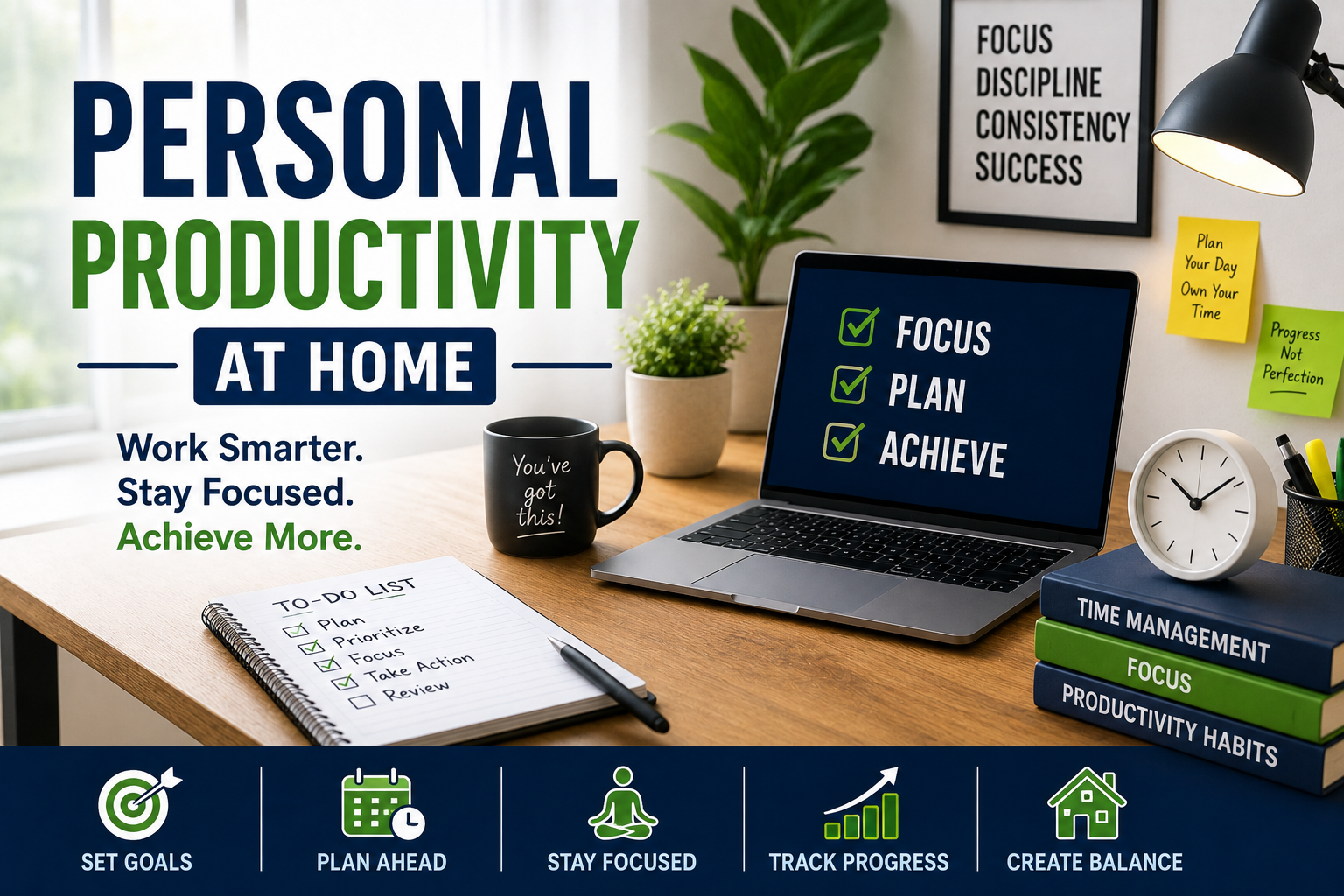
Personal Productivity at Home
Working, studying, and managing daily responsibilities from home has become a normal part of modern life for millions of people. While home offers comfort and flexibility, it can also present unique productivity challenges, including distractions, competing responsibilities, and the difficulty of separating work from personal life.
Personal productivity at home isn’t about staying busy every minute of the day. Instead, it’s about using your time, energy, and resources efficiently to accomplish meaningful goals while maintaining a healthy balance between work, family, and personal well-being.
This guide explores practical strategies for improving productivity at home, creating effective routines, minimizing distractions, and building habits that support long-term success.
What Is Personal Productivity?
Personal productivity is the ability to effectively manage time, attention, and resources to complete important tasks while maintaining physical and mental well-being.
Being productive doesn’t necessarily mean working longer hours. Instead, it focuses on working smarter by prioritizing meaningful activities, reducing unnecessary distractions, and using systems that improve efficiency.
Productive individuals often:
- Set clear goals
- Prioritize important tasks
- Manage distractions
- Plan their schedules
- Take regular breaks
- Maintain healthy routines
- Review progress regularly
- Continuously improve their habits
Why Productivity at Home Matters
Home environments can offer significant advantages, including fewer commutes, greater flexibility, and increased autonomy. However, without structure, productivity can quickly decline.
Improving productivity at home can help:
- Complete work more efficiently
- Reduce stress
- Improve work-life balance
- Increase focus
- Meet deadlines consistently
- Create more free time
- Improve motivation
- Support long-term personal and professional growth
Developing productive habits also contributes to greater satisfaction and reduced burnout.
Create a Dedicated Workspace
One of the most effective ways to improve productivity is establishing a dedicated area for focused work.
Your workspace should ideally include:
- Comfortable seating
- Good lighting
- Minimal distractions
- Reliable internet access
- Organized supplies
- Proper desk setup
Even if space is limited, creating a consistent work area helps signal to your brain that it’s time to focus.
Establish a Daily Routine
Routines reduce decision fatigue and make productive behaviors easier to repeat.
A simple daily routine might include:
- Waking up at a consistent time
- Morning planning
- Focused work sessions
- Scheduled breaks
- Exercise or movement
- Meal times
- Evening review
- Relaxation before bed
Consistency often leads to greater productivity than relying solely on motivation.
Set Clear Priorities
Not every task deserves equal attention.
Start each day by identifying your most important priorities.
Many people find it helpful to:
- List all tasks
- Rank them by importance
- Complete high-impact work first
- Break large projects into smaller steps
- Review priorities throughout the day
Focusing on meaningful work before less important tasks helps maintain momentum.
Use Time Management Techniques
Effective time management allows you to accomplish more without feeling overwhelmed.
Popular approaches include:
Time Blocking
Assign specific blocks of time to different activities, reducing multitasking and improving focus.
The Pomodoro Technique
Work for a set period—often 25 minutes—followed by a short break before beginning another session.
Task Batching
Group similar activities together, such as responding to emails or making phone calls, to reduce mental switching.
The Two-Minute Rule
If a task takes only a few minutes, consider completing it immediately rather than postponing it.
The best system is one that fits your personal workflow and remains sustainable over time.
Minimize Distractions
Home environments often include interruptions that can reduce productivity.
Common distractions include:
- Social media
- Television
- Household chores
- Mobile phone notifications
- Background noise
- Unplanned conversations
Helpful strategies include:
- Silencing unnecessary notifications
- Closing unrelated browser tabs
- Using focus timers
- Communicating work hours to family members
- Keeping only essential items on your desk
Small adjustments can significantly improve concentration.
Stay Organized
Organization reduces wasted time and mental clutter.
Consider organizing:
- Your workspace
- Computer files
- Email inbox
- Calendar
- To-do lists
- Important documents
Digital tools such as calendars, note-taking apps, and task managers can simplify planning and tracking responsibilities.
Take Regular Breaks
Working continuously without rest often leads to reduced concentration and increased fatigue.
Short breaks help:
- Refresh attention
- Reduce eye strain
- Improve creativity
- Maintain energy
- Prevent burnout
Standing, stretching, walking, or stepping outside for a few minutes can improve both physical comfort and mental performance.
Manage Your Energy, Not Just Your Time
Productivity depends on energy as much as scheduling.
Support healthy energy levels by:
- Getting enough sleep
- Staying hydrated
- Eating balanced meals
- Exercising regularly
- Managing stress
- Taking movement breaks
Many people find they perform their most demanding work during their peak energy hours.
Set Realistic Goals
Large projects become more manageable when divided into smaller milestones.
Effective goals are often:
- Specific
- Measurable
- Achievable
- Relevant
- Time-bound
Completing smaller objectives provides motivation while helping maintain steady progress.
Balance Productivity with Well-Being
Productivity should enhance life—not dominate it.
Maintaining healthy boundaries may include:
- Finishing work at a consistent time
- Spending time with family
- Pursuing hobbies
- Exercising regularly
- Taking vacations
- Disconnecting from work after hours
Long-term productivity depends on sustainable habits rather than constant work.
Helpful Productivity Tools
Many digital tools can improve organization and efficiency.
Examples include:
- Digital calendars
- Task management apps
- Note-taking software
- Cloud storage services
- Collaboration platforms
- Focus timers
- Habit trackers
- Password managers
Choosing a small number of reliable tools often works better than constantly switching between new apps.
Common Productivity Mistakes
Even well-intentioned people can develop habits that reduce efficiency.
Common mistakes include:
- Multitasking excessively
- Overloading daily schedules
- Ignoring breaks
- Working without priorities
- Constantly checking notifications
- Procrastinating on difficult tasks
- Failing to plan ahead
- Neglecting sleep and exercise
Recognizing these patterns is the first step toward improving them.
The Future of Home Productivity
Technology continues to reshape how people work from home.
Emerging developments include:
- Artificial intelligence assistants
- Smart home workspaces
- Workflow automation
- Voice-controlled productivity tools
- Virtual collaboration platforms
- Personalized scheduling systems
- Intelligent task management
- Enhanced remote work technologies
These innovations aim to reduce repetitive work while helping individuals focus on higher-value activities.
Final Thoughts
Personal productivity at home is about creating systems that allow you to work efficiently while maintaining a healthy and balanced lifestyle. By establishing routines, organizing your environment, prioritizing meaningful tasks, managing distractions, and taking care of your physical and mental well-being, you can accomplish more without sacrificing quality of life.
Productivity is ultimately a long-term habit rather than a short-term achievement. Small, consistent improvements in daily routines often produce the greatest results, helping you stay focused, reduce stress, and create a home environment that supports both personal and professional success.




2 Comments
Micle harison
June 7, 2019Lorem ipsum dolor sit amet, usu ut perfecto postulant deterruisset, libris causae volutpat at est, ius id modus laoreet urbanitas. Mel ei delenit dolores.
John Doe
June 7, 2019Some consultants are employed indirectly by the client via a consultancy staffing company.