
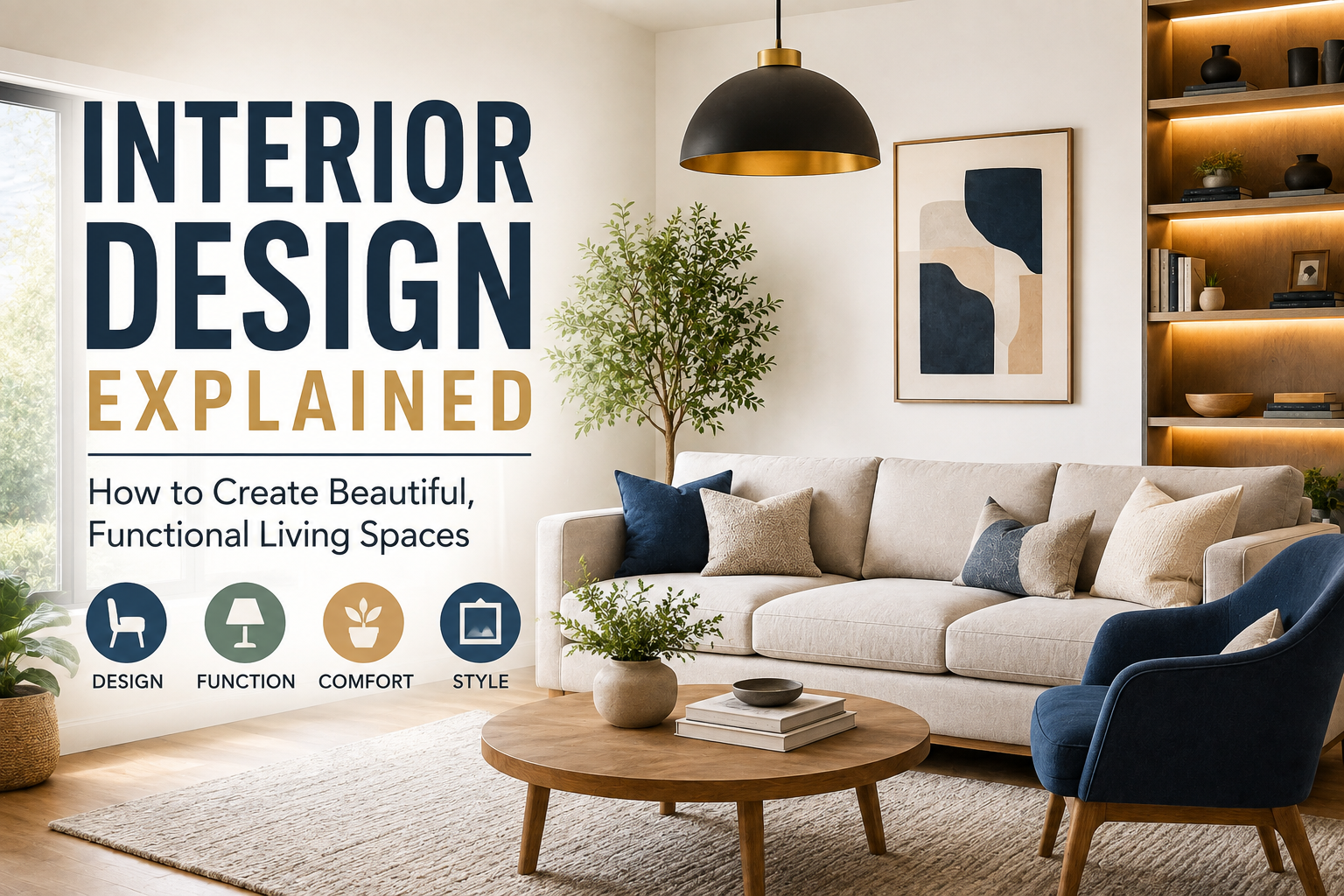
Interior Design Explained: How to Create Beautiful, Functional Living Spaces
Interior design is much more than choosing paint colors or buying stylish furniture. It is the art and science of creating spaces that are both beautiful and practical, reflecting the people who live or work within them. Whether you’re furnishing your first apartment, renovating your forever home, or simply refreshing a single room, understanding the fundamentals of interior design can help you create spaces that improve comfort, productivity, and overall well-being.
Modern interior design combines aesthetics, functionality, psychology, and architecture to create environments that support everyday life. From selecting the right color palette to maximizing natural light and making the best use of available space, thoughtful design can transform ordinary rooms into welcoming, efficient, and inspiring places.
This guide explores the core principles of interior design, popular design styles, practical decorating tips, and emerging trends that are shaping the homes of the future.
What Is Interior Design?
Interior design is the process of planning, designing, and decorating interior spaces to improve both their appearance and functionality.
Professional interior designers consider factors such as:
- Space planning
- Furniture layout
- Lighting
- Color schemes
- Materials
- Textures
- Accessibility
- Comfort
- Safety
- Lifestyle needs
Unlike simple decoration, interior design focuses on how a space works as well as how it looks.
Why Interior Design Matters
Well-designed spaces positively influence daily life.
Good interior design can:
- Improve comfort
- Increase productivity
- Reduce stress
- Enhance mood
- Maximize available space
- Increase property value
- Improve organization
- Encourage social interaction
- Support better sleep
- Reflect personal style
Whether it’s a cozy living room or an efficient home office, thoughtful design makes everyday living easier and more enjoyable.
The Fundamental Principles of Interior Design
Successful interiors are built around several timeless design principles.
Balance
Balance creates visual stability.
Three common types include:
Symmetrical Balance
Objects are mirrored on both sides.
Example:
- Matching sofas
- Twin bedside tables
- Paired lamps
Creates a formal and elegant appearance.
Asymmetrical Balance
Different objects create equal visual weight.
Example:
- A sofa balanced by two accent chairs
- Artwork balanced by shelving
Produces a more relaxed, modern feel.
Radial Balance
Design elements radiate from a central point.
Examples include:
- Round dining tables
- Circular chandeliers
- Spiral staircases
Harmony
Harmony ensures all design elements work together.
This includes coordinating:
- Colors
- Materials
- Furniture
- Patterns
- Lighting
- Accessories
A harmonious room feels cohesive rather than cluttered.
Contrast
Contrast adds visual interest.
Examples include:
- Dark and light colors
- Smooth and textured materials
- Modern and vintage furniture
- Large and small décor pieces
Without contrast, rooms can feel flat or monotonous.
Rhythm
Rhythm guides the eye naturally around a room.
It can be created through repeating:
- Colors
- Shapes
- Materials
- Textures
- Lighting
- Patterns
Proportion and Scale
Furniture and décor should fit the room appropriately.
Oversized furniture may overwhelm small spaces, while tiny furniture can feel lost in large rooms.
Focal Point
Every room benefits from a visual centerpiece.
Examples include:
- Fireplace
- Large window
- Statement artwork
- Accent wall
- Dining table
- Television
- Bookshelf
The rest of the room should support—not compete with—the focal point.
Elements of Interior Design
Space
Space forms the foundation of every design.
Designers consider:
- Room dimensions
- Ceiling height
- Traffic flow
- Furniture placement
- Storage needs
Making efficient use of space improves functionality.
Color
Color dramatically affects mood and perception.
Warm Colors
- Red
- Orange
- Yellow
These colors create energy and warmth.
Cool Colors
- Blue
- Green
- Purple
These colors often promote calmness and relaxation.
Neutral Colors
- White
- Beige
- Gray
- Cream
- Taupe
Neutral palettes remain popular because they are versatile and timeless.
Light
Lighting influences both function and atmosphere.
A balanced lighting plan typically includes:
Ambient Lighting
General room illumination.
Task Lighting
Focused light for reading, cooking, or working.
Accent Lighting
Highlights artwork, architectural details, or decorative features.
Natural light should also be maximized whenever possible.
Texture
Combining textures adds depth and comfort.
Examples include:
- Wood
- Stone
- Glass
- Linen
- Velvet
- Leather
- Wool
- Metal
Mixing soft and hard surfaces creates visual richness.
Pattern
Patterns introduce personality.
Popular options include:
- Geometric
- Floral
- Abstract
- Stripes
- Organic shapes
Using patterns thoughtfully prevents rooms from feeling overly busy.
Popular Interior Design Styles
Modern
Features:
- Clean lines
- Neutral colors
- Minimal decoration
- Open spaces
- Functional furniture
Contemporary
Often confused with modern design, contemporary interiors reflect current trends while remaining flexible.
Scandinavian
Known for:
- Simplicity
- Natural materials
- Light wood
- Bright spaces
- Cozy comfort (hygge)
Minimalist
Focuses on:
- Fewer possessions
- Clean surfaces
- Functional furniture
- Neutral palettes
- Clutter-free living
Industrial
Inspired by converted warehouses.
Features include:
- Exposed brick
- Metal accents
- Concrete
- Dark colors
- Open ceilings
Traditional
Characterized by:
- Rich wood furniture
- Symmetry
- Classic architecture
- Decorative moldings
- Elegant fabrics
Farmhouse
Blends rustic charm with comfort.
Includes:
- Natural wood
- Soft colors
- Vintage décor
- Cozy textiles
- Open shelving
Bohemian (Boho)
Celebrates creativity through:
- Bold colors
- Mixed patterns
- Plants
- Handmade décor
- Global influences
How to Design Every Room
Living Room
Focus on:
- Comfortable seating
- Conversation-friendly layout
- Layered lighting
- Functional storage
- Area rugs
- Personal artwork
Kitchen
Prioritize:
- Workflow
- Durable surfaces
- Adequate lighting
- Storage
- Ventilation
- Easy cleaning
Bedroom
Create a restful environment with:
- Soft lighting
- Comfortable bedding
- Minimal clutter
- Calming colors
- Blackout curtains
- Quiet surroundings
Bathroom
Good bathroom design emphasizes:
- Storage
- Moisture-resistant materials
- Bright lighting
- Ventilation
- Practical organization
Home Office
Essential features include:
- Ergonomic furniture
- Good lighting
- Cable management
- Sound control
- Organized storage
Common Interior Design Mistakes
Avoid these frequent errors:
- Choosing furniture that’s too large or too small
- Poor lighting
- Ignoring room proportions
- Blocking natural light
- Overdecorating
- Buying everything from one collection
- Hanging artwork too high
- Neglecting storage
- Using too many colors
- Forgetting functionality
Budget-Friendly Interior Design Tips
Beautiful spaces don’t always require expensive renovations.
Affordable improvements include:
- Rearranging furniture
- Painting walls
- Adding indoor plants
- Replacing throw pillows
- Updating light fixtures
- Installing floating shelves
- Using mirrors to increase brightness
- Decluttering regularly
- Mixing old and new furniture
- Refreshing hardware on cabinets
Small updates can dramatically change a room’s appearance.
Sustainable Interior Design
Eco-friendly design continues gaining popularity.
Sustainable choices include:
- Reclaimed wood
- Energy-efficient lighting
- Recycled materials
- Natural fabrics
- Low-VOC paints
- Vintage furniture
- Indoor plants
- Durable, long-lasting products
These options reduce environmental impact while creating healthier living spaces.
Smart Home Design
Technology increasingly influences interior design.
Popular smart features include:
- Smart lighting
- Voice assistants
- Automated blinds
- Smart thermostats
- Home security systems
- Wireless charging furniture
- Smart appliances
- Energy monitoring
Modern homes combine technology with aesthetics for greater convenience.
Interior Design Trends Shaping the Future
Several trends continue influencing contemporary interiors:
- Multifunctional spaces
- Biophilic design (bringing nature indoors)
- Curved furniture
- Earth-tone color palettes
- Sustainable materials
- Smart home integration
- Wellness-focused spaces
- Home offices
- Personalized interiors
- Flexible furniture
Rather than chasing short-lived fads, many homeowners now prioritize timeless design that adapts to changing lifestyles.
Common Interior Design Myths
| Myth | Reality |
|---|---|
| Small rooms must always be painted white. | Many colors can work well when balanced with lighting and décor. |
| Expensive furniture guarantees good design. | Thoughtful planning matters more than price. |
| Minimalism means empty rooms. | Minimalism focuses on intentional choices, not lack of comfort. |
| Every room needs matching furniture. | Mixing styles often creates more interesting interiors. |
| Trends should dictate every design decision. | Timeless design usually outlasts short-term trends. |
Frequently Asked Questions
What is the difference between interior design and interior decorating?
Interior design focuses on planning functional spaces, layouts, lighting, and structural elements, while decorating emphasizes furnishings, colors, and accessories.
How do I choose the right color palette?
Consider the room’s purpose, natural light, existing furniture, and the atmosphere you want to create. Testing paint samples in different lighting conditions can help.
What is the most important principle of interior design?
There isn’t a single most important principle, but achieving a balance between functionality, comfort, and visual harmony is essential.
How can I make a small room look larger?
Use mirrors, maximize natural light, choose appropriately scaled furniture, reduce clutter, and maintain a cohesive color palette.
Is hiring an interior designer worth it?
For major renovations or complex layouts, professional guidance can help avoid costly mistakes. Smaller projects can often be completed successfully using basic design principles.
What interior design style is the most timeless?
Styles such as Scandinavian, modern, and transitional designs are known for their simplicity, functionality, and long-lasting appeal.
Conclusion
Interior design is about creating spaces that support the way people live, work, and relax. While beautiful furniture and stylish décor certainly contribute to a room’s appeal, successful interiors are built on thoughtful planning, functional layouts, balanced proportions, and an understanding of how color, light, texture, and space interact.
Whether you’re redesigning an entire home or refreshing a single room, focusing on timeless design principles rather than passing trends will help create living spaces that remain comfortable, practical, and visually appealing for years to come. With careful planning and attention to both aesthetics and functionality, anyone can transform a house into a home that truly reflects their personality and lifestyle.





2 Comments
Micle harison
June 7, 2019Lorem ipsum dolor sit amet, usu ut perfecto postulant deterruisset, libris causae volutpat at est, ius id modus laoreet urbanitas. Mel ei delenit dolores.
John Doe
June 7, 2019Some consultants are employed indirectly by the client via a consultancy staffing company.