
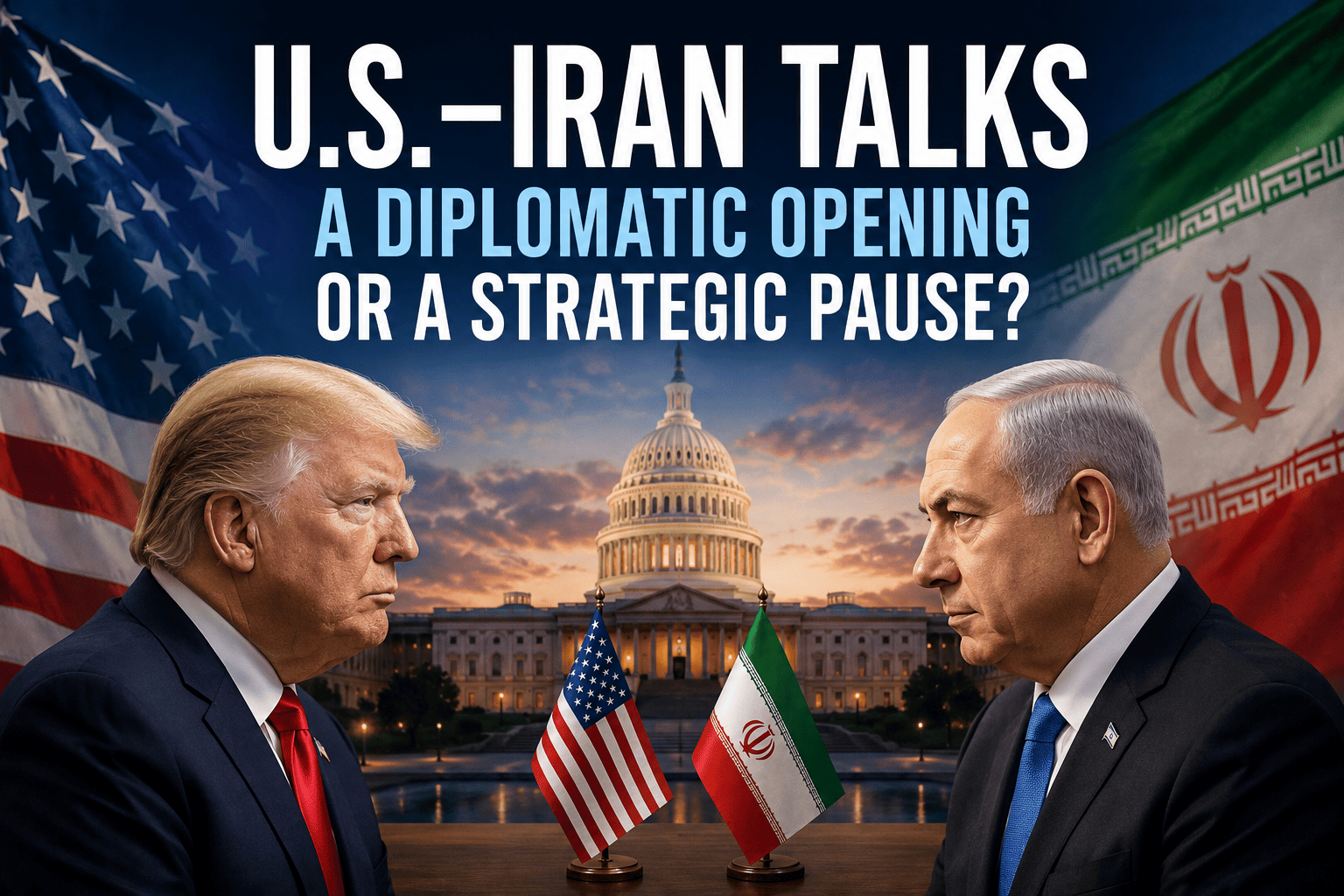
Trump Signals “Friendly” U.S.–Iran Talks as Netanyahu Visits Washington: A Diplomatic Opening or a Strategic Pause?
After months of military escalation, missile strikes, and growing fears of a wider regional war, the tone coming from Washington has shifted - at least for now.
U.S. President Donald Trump has revealed that the United States is engaged in what he described as “very friendly” talks with Iran, a notable change in rhetoric following months of confrontation. The comments came as Israeli Prime Minister Benjamin Netanyahu arrived in Washington for a high-stakes meeting expected to focus heavily on Iran, regional security, and the future of the Middle East.
The timing is significant.
Only weeks ago, military exchanges between the United States, Israel, and Iran had pushed the region closer to a broader conflict. Now, diplomacy appears to be re-emerging alongside continued military preparedness—a delicate balancing act that could shape global politics, energy markets, and international security for months to come.
The question now is whether these talks represent the beginning of a genuine diplomatic breakthrough or simply a temporary pause before another period of confrontation.
A Surprising Shift in Tone
Speaking ahead of Netanyahu’s visit, Trump said Washington and Tehran were holding “very friendly negotiations,” suggesting that dialogue remained possible despite recent hostilities.
At the same time, he made clear that the United States was prepared to respond militarily if diplomacy failed, illustrating a strategy that combines negotiation with deterrence.
That dual message reflects the complexity of U.S. policy toward Iran.
On one hand, the administration appears interested in avoiding another prolonged Middle East conflict.
On the other, it continues to insist that Iran must not acquire nuclear weapons and has signaled that military options remain available if negotiations collapse.
For international observers, Trump’s remarks suggest that Washington is attempting to create diplomatic space without appearing weak—a familiar strategy in high-stakes geopolitical negotiations.
Why Netanyahu’s Washington Visit Matters
Prime Minister Benjamin Netanyahu’s trip to Washington comes at a pivotal moment.
According to Israeli officials, Iran is expected to dominate discussions between the two leaders.
The visit is the first face-to-face meeting between Trump and Netanyahu since tensions with Iran intensified dramatically earlier this year.
While the United States appears increasingly interested in testing diplomacy, Israel remains deeply concerned about Iran’s nuclear ambitions and the influence of Iranian-backed groups across the Middle East.
Netanyahu has consistently argued that Iran represents Israel’s greatest long-term security challenge.
For Israel, negotiations are only valuable if they lead to measurable restrictions on Iran’s military and nuclear capabilities.
That difference in emphasis creates one of the most important questions surrounding the meeting:
Can Washington pursue diplomacy while maintaining Israel’s confidence?
Diplomacy After Months of Escalation
The renewed diplomatic effort follows one of the most dangerous periods in recent Middle Eastern politics.
Military exchanges involving U.S. and Israeli forces, Iranian retaliation, and attacks affecting regional shipping raised fears that the conflict could spread far beyond the region.
Global energy markets reacted immediately.
- Oil prices became increasingly volatile.
- Shipping through the Strait of Hormuz—a critical route for a significant share of the world’s oil exports—faced disruption.
These developments reminded governments how closely Middle East security is linked to the global economy.
Against that backdrop, even limited diplomatic progress could have far-reaching consequences.
The Economic Stakes Extend Far Beyond the Middle East
Although the negotiations focus on security, their economic implications are enormous.
Oil Prices
Iran sits at the center of one of the world’s most strategically important energy regions.
Any improvement in regional stability could reduce fears of supply disruptions and ease upward pressure on oil prices.
Lower energy prices often translate into:
- Reduced transportation costs
- Lower manufacturing expenses
- Slower inflation
- Improved consumer confidence
Conversely, renewed conflict could quickly send energy prices higher again.
Financial Markets
Global investors closely monitor geopolitical developments involving Iran.
Periods of rising tension often increase demand for traditionally safer investments such as:
- Gold
- U.S. Treasury securities
- The U.S. dollar
Positive diplomatic developments, however, generally encourage greater appetite for risk assets, including equities.
Markets are therefore watching these talks not only for political signals but also for clues about future economic conditions.
Global Trade
The Strait of Hormuz remains one of the world’s most important maritime trade routes.
Millions of barrels of oil pass through the narrow waterway every day.
Any disruption affects:
- Energy markets
- Shipping costs
- Insurance premiums
- International supply chains
Even small improvements in regional security can help stabilize global trade.
Can Diplomacy Succeed?
History suggests that negotiations between Washington and Tehran are rarely straightforward.
Relations have been shaped by decades of:
- Mistrust
- Sanctions
- Military incidents
- Competing regional interests
Major obstacles remain, including:
- Iran’s nuclear program
- Regional proxy conflicts
- Economic sanctions
- Security guarantees
- Verification mechanisms
While Trump’s comments indicate optimism, neither side has suggested that a comprehensive agreement is close.
Instead, many analysts believe current discussions are focused on preventing further escalation while exploring whether broader negotiations remain possible.
Different Priorities, Shared Interests
Although Washington and Jerusalem remain close allies, their immediate priorities may not be identical.
The United States appears increasingly focused on reducing the risk of another costly regional conflict while preserving strategic leverage through diplomacy backed by military strength.
Israel’s leadership, meanwhile, continues to prioritize preventing Iran from strengthening its military or nuclear capabilities.
These objectives overlap in many respects, but they may differ on questions such as:
- Timing
- Military strategy
- Sanctions
- Conditions for future agreements
The Washington meeting provides an opportunity to coordinate those approaches before negotiations move further.
Regional Powers Are Watching Closely
The outcome of these discussions will influence far more than U.S.–Iran relations.
Countries throughout the Middle East—including Gulf states, Lebanon, Iraq, and others—have strong interests in preventing another large-scale conflict.
Many governments hope diplomacy can reduce instability while protecting energy exports and encouraging economic growth.
At the same time, regional actors remain cautious.
Any collapse in negotiations could quickly return the region to military confrontation.
Political Pressure at Home
The diplomatic effort also unfolds against challenging domestic political environments.
Trump faces pressure to demonstrate that his administration can balance national security with economic stability.
Netanyahu, meanwhile, confronts political challenges in Israel while continuing to emphasize national security as a central issue.
Success in diplomacy could strengthen both leaders politically.
Failure could increase calls for tougher military action.
Why the World Is Paying Attention
Even though these discussions involve only a handful of leaders, their consequences extend worldwide.
A successful diplomatic process could contribute to:
- Greater regional stability
- More predictable oil markets
- Lower geopolitical risk
- Increased investor confidence
A breakdown, however, could trigger renewed uncertainty with consequences reaching far beyond the Middle East.
Businesses, governments, financial institutions, and energy markets all recognize that developments in Washington this week could shape global headlines for months to come.
What Happens Next?
The immediate focus is on the discussions between Trump and Netanyahu.
Observers will watch closely for signs of:
- Coordinated diplomatic strategy
- Changes to sanctions policy
- Security commitments
- Future negotiations with Tehran
- Regional de-escalation measures
While expectations remain cautious, the simple fact that diplomacy has re-entered the conversation marks an important development after months dominated by military headlines.
Whether this moment becomes the beginning of lasting negotiations—or merely a pause before renewed confrontation—will depend on decisions made in the coming weeks.
Final Thoughts
Trump’s description of “friendly” U.S.–Iran talks represents one of the clearest indications yet that Washington is testing a diplomatic path even as it maintains military pressure.
Netanyahu’s arrival in Washington underscores how central Iran remains to both American and Israeli strategic thinking.
The meeting comes at a moment when diplomacy, security, energy markets, and global economics are deeply interconnected.
For now, optimism is cautious rather than certain.
The negotiations face significant obstacles, but after months of escalating conflict, even a small diplomatic opening offers an opportunity that many governments—and global markets—will be watching with intense interest.
Whether these talks evolve into a lasting agreement or simply delay another period of confrontation may prove to be one of the defining geopolitical stories of the year.



2 Comments
Micle harison
June 7, 2019Lorem ipsum dolor sit amet, usu ut perfecto postulant deterruisset, libris causae volutpat at est, ius id modus laoreet urbanitas. Mel ei delenit dolores.
John Doe
June 7, 2019Some consultants are employed indirectly by the client via a consultancy staffing company.